News
Cinema’s Share of Russia’s Offline Entertainment Market Halves in Six Years, Study Finds
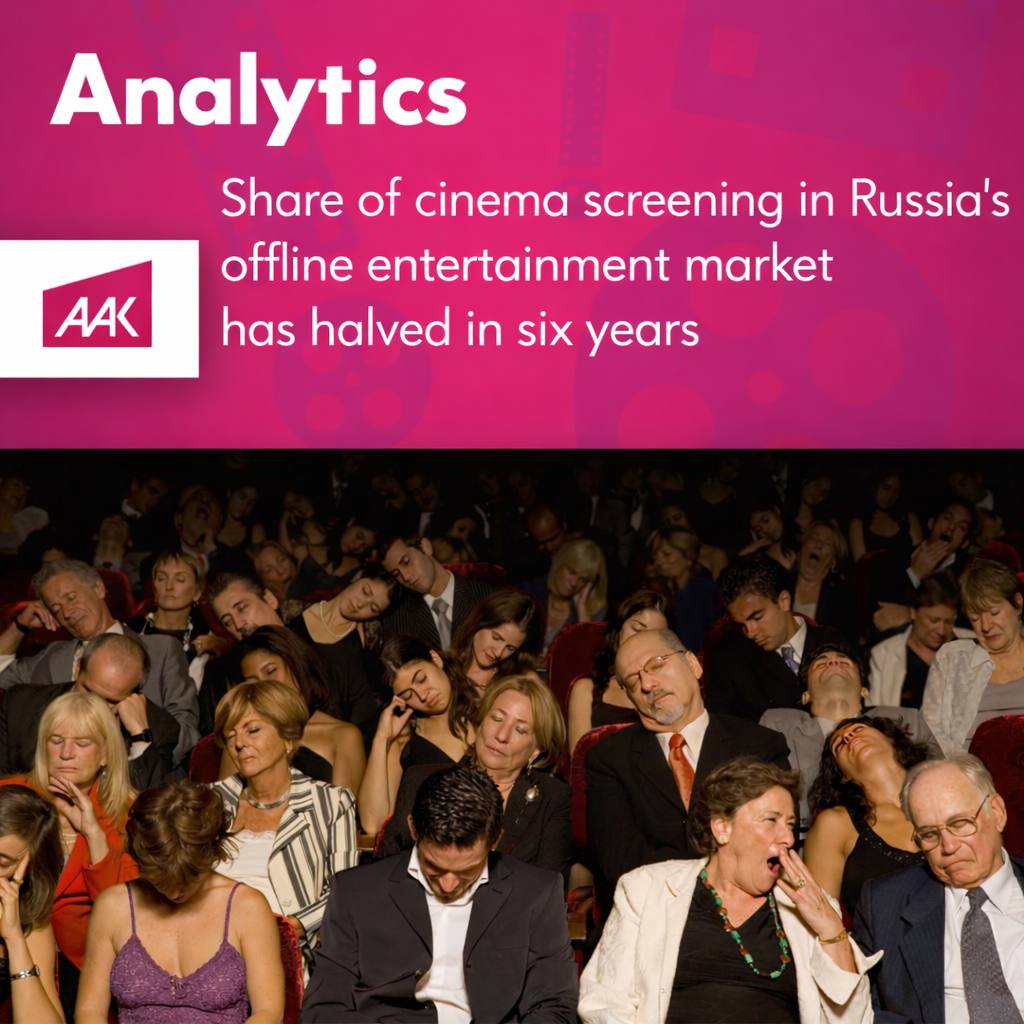
A study by Yandex Afisha, Kassir.ru, and consulting company OKS Labs shows that the share of cinema in Russia’s offline entertainment market has fallen by half over the past six years.
The companies published a new segment of their research on the Russian offline entertainment market, analyzing sales trends across seven segments: concerts, theaters, cinemas, museums and exhibitions, shows, sports events, and children’s activities.
According to the report, 74% of tickets in Russia are now purchased online, with the highest share recorded in concerts, shows, and sports events. In 2025, the offline events market grew by 28% in monetary terms, reaching 306 billion rubles. At the same time, total attendance amounted to 439 million tickets, which is still 13% below the level recorded in 2019. Analysts expect the figure to reach 454 million visits in 2026, representing a projected increase of 3%.
Cinemas remain the only segment that has not recovered from the effects of the pandemic. The share of cinema screenings within the overall offline entertainment market declined from 29% in 2019 to 15% in 2025. Analysts attribute this to the absence of Hollywood premieres, which has not been offset by the increased number of domestic film releases. As a result, audiences have increasingly shifted toward concerts, theaters, museums, and exhibitions.
Cinema attendance in 2025 remains 46% lower than in 2019. The growth in box office revenue seen in recent years has been driven primarily by higher ticket prices rather than a recovery in audience demand. Since 2022, ticket prices have risen by approximately 50%.
Looking ahead to 2026, analysts expect box office revenue to increase by around 5%, although it will still remain about 4% below the 2019 level. Cinema attendance is projected to stay roughly at the 2025 level, with about 118 million tickets sold. Experts do not anticipate significant ticket price increases due to audience price sensitivity and the risk of declining demand.
Source: Bulletin of the Film Distributor.