News
“If the author is truly interested in the story, the audience won’t get tired of it”: Maria Parfenova, Head Writer at Parovoz Studio, on the secrets behind creating animated hits
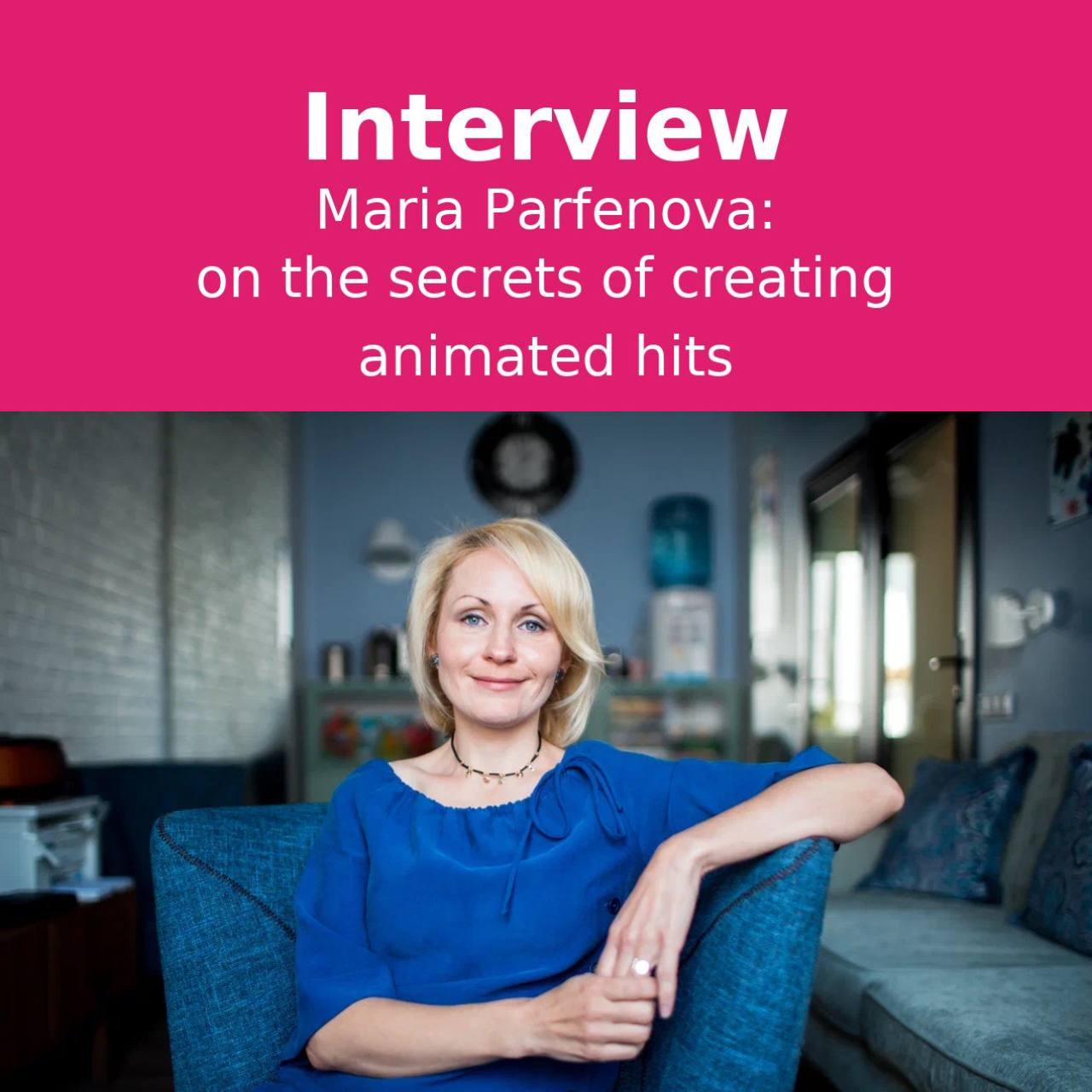
Parovoz Animation Studio continues to hold the attention of both audiences and the professional community: four of its projects made the longlist for the Golden Eagle Award, and Fantasy Patrol was named Best Animated Series at the National Children’s Award “Main Heroes — 2025” by the Carousel channel. Behind these successes is a large team of screenwriters, directors and artists united by a genuine love for their craft. Maria Parfenova, the studio’s Head Writer, shares how stories are born that remain relevant year after year.
The studio is celebrating its 11th anniversary — a solid milestone for Russian animation. Where did your story with Parovoz begin? Do you remember the moment you realized this was the place where you wanted to create worlds?
These years have flown by for me in an instant — that’s how exciting it is to work at Parovoz. I was invited to the studio during its very first year. At the time, I was working on another studio’s project, but many of my friends from the animation field had already joined Parovoz. I agreed to visit out of curiosity — and also to see my friends. I arrived and immediately found myself at a brainstorm for a new project. That’s where I met the creative producer and director — and I was so inspired by the atmosphere, the creative energy, and the sincerity of the environment, that I decided to stay. I have never regretted it.
Here, I grew into the role of Head Writer; here, together with my colleagues, we created many magical worlds; here, I truly felt at home. Parovoz is not just a workplace — it is a place that creates unique conditions for comfort, creative growth, and development.
What does your typical workday look like? Do you have any rituals that help you “enter” the story?
The workday at the studio begins not too early — many creative people work late into the evening, and they are given the opportunity to rest. The day usually starts, like for many, with a cup of good coffee in our café. In the morning, it is very effective to reread what was written the previous day — with a fresh head you notice nuances you didn’t see before. New ideas come on how to improve the material we are working on. Then we gather as a creative department for group script readings — this is incredibly helpful. As the saying goes, one head is good, but several different creative minds together are wonderful. Through live discussion, living stories are born.
You work on all of the studio’s projects. How would you define Parovoz’s creative signature — what makes its animation recognizable?
Our studio strives to produce high-quality content — from script to animation, voice acting, and music. Our specialists are constantly growing, staying aware of trends and new technologies. We experiment with style, directing, and artistic approaches. The one thing that never changes is our values: Parovoz always aims to cultivate kindness, honesty, wisdom, friendship, and self-understanding in our young viewers.
Fantasy Patrol has remained a hit for many years. How does your writing team ensure that the audience doesn’t “burn out” by the fifth season? Is there a formula for success?
Fantasy Patrol is the very project with which my journey at Parovoz began. And although I’ve worked on many other series in parallel, I have never stepped away from Patrol. Over these 11 years, I’ve grown together with the heroines — gone through the difficulties of adolescence and adapting to a constantly changing world alongside them. I’m living a “fairy-tale life” with them and feel like part of the team myself. That’s why I don’t burn out — I’m truly involved in the adventure. And if the author is genuinely interested in the story, the chances are high that the audience will not grow tired of it either.
Children of Generation Alpha are growing up in a completely different media environment. What changes in their perception do you notice?The speed of perception and the speed of thought. Every year, everything becomes faster. Plot development, shot transitions — everything has to move quickly. Try watching films from 10–15 years ago — how slow and smooth everything seems. Modern children won’t wait. If you don’t capture their attention in the first minute, you will lose them.
Do you think animated heroes have changed in the last decade?
Yes. Modern animated characters have become more mature, confident and independent. Children today want to see strong, charismatic characters — ideally with extraordinary abilities. Plotlines have become more complex, with unexpected dramatic turns. Children want to associate themselves with someone bold, unusual, and capable of overcoming difficulties.
Tell us more about Beyond. What inspired you to create this project, and what themes were important for you to address?
Beyond is a film about a child with special needs and their family. As the mother of a neurodivergent child, having gone through a difficult path of “special motherhood,” I simply wanted to say through this film that we are all very different, but each of us deserves understanding and acceptance. It is not an educational story — rather, a slice of life, a quiet reminder: let’s try to be a little kinder to one another. A little empathy can help someone find their place in our complicated world.
Is there a project you consider your most personal?
I love all the projects we’ve created at Parovoz. Of course, Fantasy Patrol is dear to my heart, but I also want to mention the series and the feature film The Forgotten Miracle. It tells the story of Sergius of Radonezh and modern children who, having found themselves in the past, go through trials and spiritual growth. The work on this film was incredibly rewarding — we visited the Trinity Lavra of St. Sergius, spoke with clergy, worked with historical sources, deeply researched the topic. The result is a touching, resonant film that evokes a wide range of emotions. If you haven’t seen it yet — I truly recommend it.
AI is already entering creative industries. Do you think artificial intelligence can become a co-author in animation — or will there always be something essentially human?
For now, not a full co-author — but definitely a useful assistant. AI can analyze text, point out weak spots, and quickly provide relevant information. While it cannot yet create a fully developed narrative on its own, in the hands of an experienced writer, it certainly makes the creative process easier and faster.